Singing colors, flying colors, the colors of villages, gardens, and nature… all of the artists in these eight picture books were inspired by color. But the connection between their stories goes beyond the color palettes of their worlds. Each artist felt a calling that they couldn’t ignore, even when the people around them, whom they cared about most, didn’t believe in them. They persevered, some for so long that they were very old when they even began to make art, and often they were ridiculed and misunderstood before just one person took notice and saw something special in their work. Eventually, their fresh take on what they saw and felt and heard in the colors and images of everyday life set them apart from others. It was their unique ideas and perseverance that ultimately made them famous.

[ I am a participant in affiliate programs designed to provide a means for bloggers to earn small fees at no cost to you by linking to Amazon.com and affiliated sites. ]
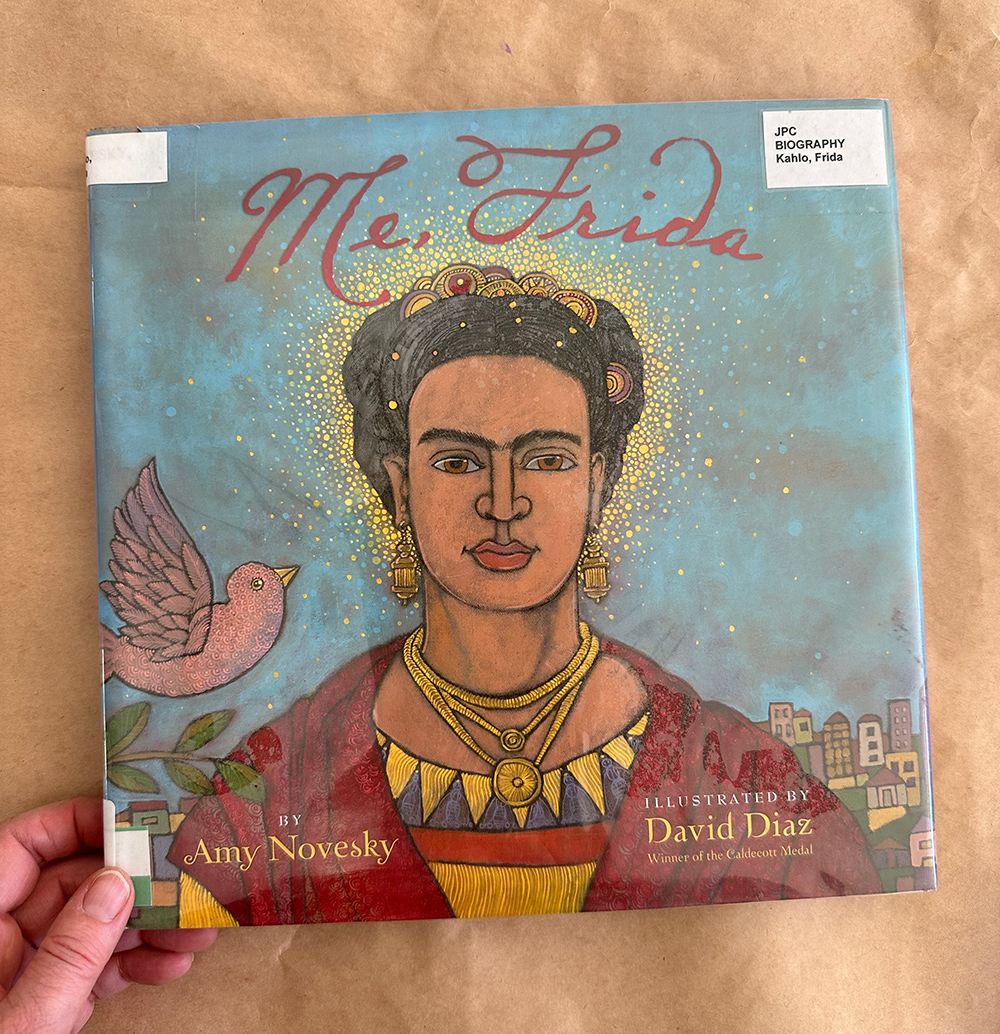
Me, Frida
by Amy Novesky, illustrated by David Diaz
This book is about Frida Kahlo’s time spent in San Francisco. She had never left Mexico before, but she was excited to travel with her husband, Diego Rivera, a famous artist who was painting a mural for the city. While he was celebrated by the city’s elite, Frida stood quietly by his side, lost and overlooked. She didn’t know much English and didn’t have many friends, but she was brave and decided to explore San Francisco on her own. She rode the streetcar and was captivated by the bold colors of Chinatown and the sweeping views of the landscape, seen from high up on the hills. Feeling like a bird soaring above the city, she was so inspired and returned home to paint. When others said her work was only “passable,” she continued anyway. Her first exhibition in San Francisco featured her powerful self-portrait. Wearing her best dress and ancient jade necklaces, she walked proudly into the gallery, and for the first time, people looked at her in wonder.


The Fantastic Jungles of Henri Rousseau
by Michelle Markel, illustrated by Amanda Hall
Henri Rousseau was a toll collector who had never been told he was talented. At 40 years old, he bought some canvas, paint, and brushes. He loved nature; when walking through Paris parks, the flowers opened their hearts for him. He taught himself to paint by visiting the Louvre after work. Inspired by nature, parks, and postcards of faraway lands, he painted what he imagined: lush jungles and strange animals. His portraits were mocked, some even said they looked like they were painted with his eyes closed, but he kept painting anyway. A gardener at the Jardin de Plantes let him into the greenhouse, and when he entered, it felt like a dream. He painted a desert at night, bathed in the moon glow with a gypsy and a lion. He brought his painting to an art show, but experts said he painted like a child. Henri knew his paintings were flatter and simpler, but that’s what made them lovely. He gave music lessons at night to fund his art supplies and woke up every morning smiling at his paintings. When younger artists, including Picasso, finally saw the beauty in his work, Henri’s dream came true: he was celebrated, and his heart floated like a hot-air balloon.


(Sidenote: As a child, I spent hours looking through art books, in particular, I loved and was so captivated by Henri Rousseau. I can’t imagine that this is something children do anymore in this digital age, but it’s just such a strong memory of mine. Having hours of time with no TV, no electronics, just a record player and books seems so old-fashioned. But I hope to someday provide this time to my grandchildren. My own children had this time, but they filled it with dress-up and putting on shows. A very magical childhood.


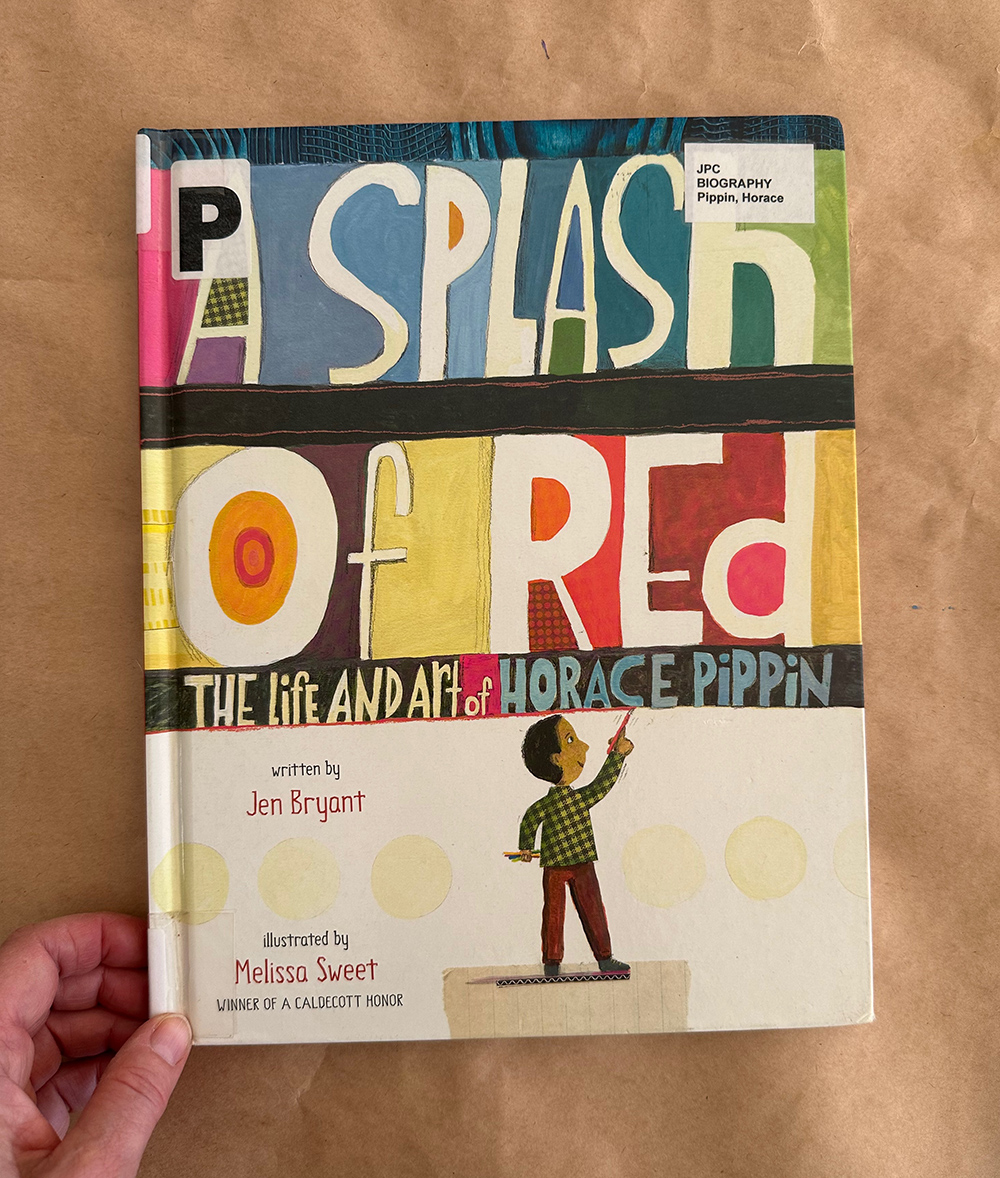
A Splash of Red: The Life and Art of Horace Pippin
by Jen Bryant, illustrated by Melissa Sweet
Born in Pennsylvania in 1888, Horace Pippin had long legs and big hands. But his grandma always said, “The biggest part of you is inside, where no one can see.” He was a big help to his family on their farm, but at night he would draw, draw, draw with charcoal and scraps of paper. At school, everyone asked him to make a picture for them. He entered a drawing contest and won his first set of real art supplies. But he left school in eighth grade to help support his family and then joined the army. It was wet and cold and dark in France during World War I. He didn’t see the sun for the month. In between fighting, he drew pictures for his soldier friends. One day, he was shot in the arm and lost the ability to draw. He came home, got married, and helped his wife with her laundry business while he dreamed of drawing again and worked to get his arm stronger. With no money for art supplies, he found an old brush and leftover house paint in an alley. He used only black, white, and gray: the somber colors of war. With a splash of red. He painted scenes from everyday life and displayed them in a shoe store window. At first, no one noticed, until the famous painter N.C. Wyeth saw his work and declared it “some of the purest expression I have seen in a long time.” At last, the world saw what Horace had always known: he was an artist.


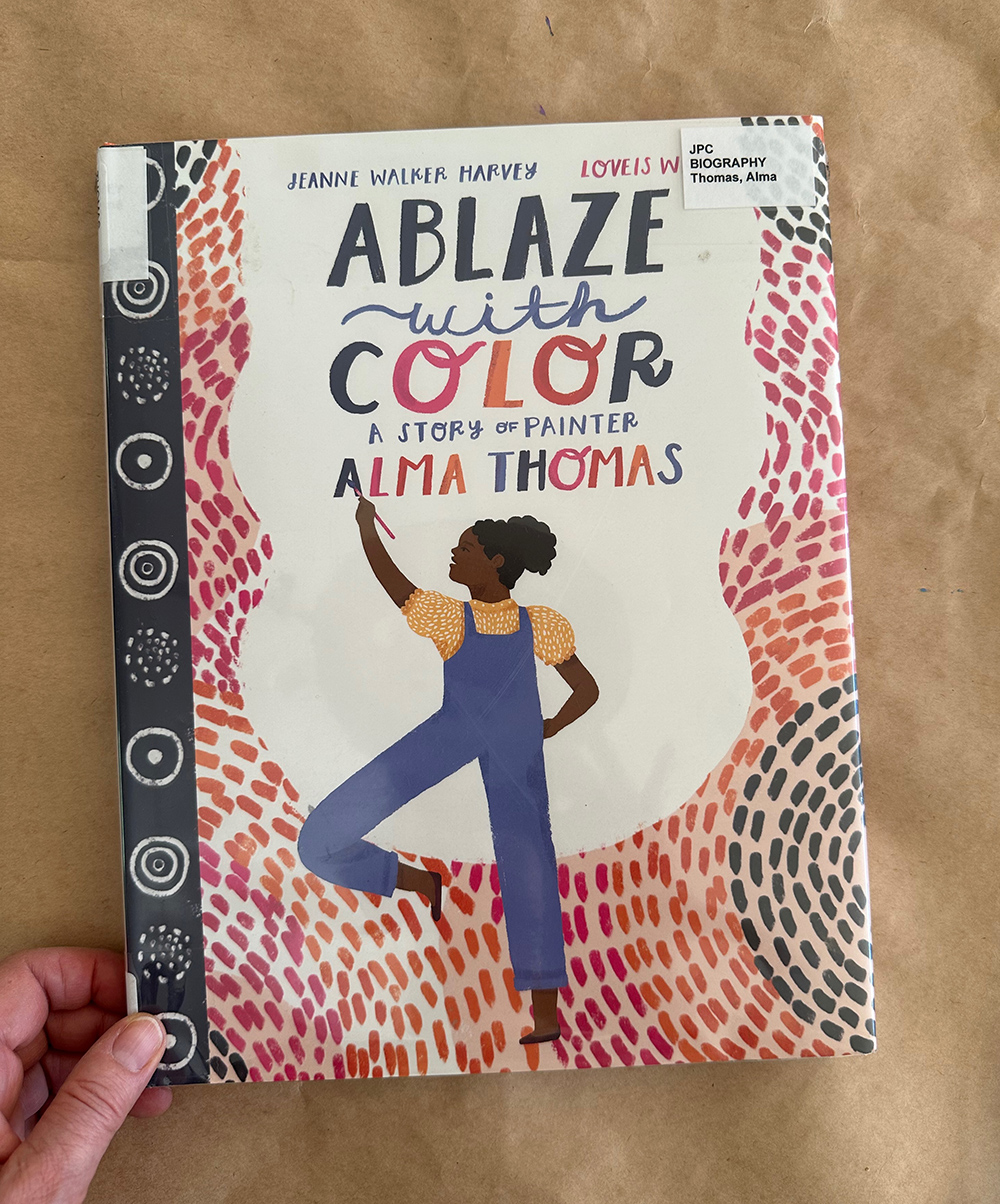
Ablaze with Color: A Story of Painter Alma Thomas
by Jeanne Walker Harvey, illustrated by Loveis Wise
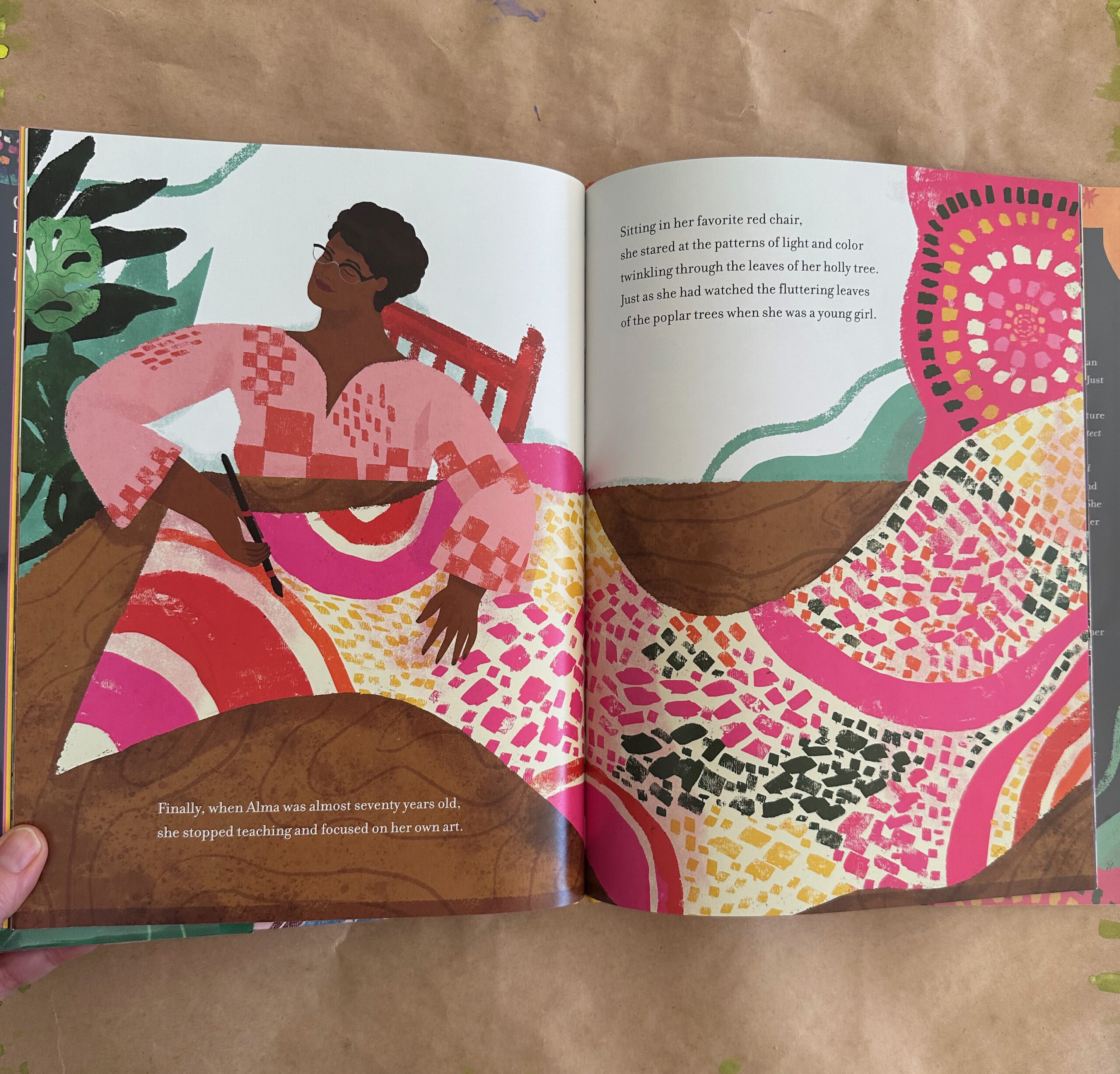
Alma Thomas was born in Georgia, the oldest of four girls. She loved being outside in the garden, soaking up the colors of nature. As her sisters would sit and cook and sew, Alma was always on the move and had to make things. She scooped up red clay from the banks of the streams and made small bowls and cups. Her mom designed dresses, so she was always around dazzling colors and creativity. She and her sisters weren’t allowed in the school next door because of segregation, but her parents filled their home with books and invited teachers to speak. When Alma was 15, her family moved to Washington, D.C. so she and her sisters could go to school. Alma became an art teacher, determined to bring art to the young children in her neighborhood. She painted in her free time, but it wasn’t until she retired at nearly 70 years old that she truly began to focus on her own work. She began painting the patterns of light and color that came through the trees into the window. She painted circles, stripes, dashes and dabs, ablaze with color. The Whitney Museum hosted her solo exhibition, making her the first Black woman to have one there. And years later, her painting would hang in the White House dining room, where famous leaders, teachers, and artists gathered. Just like they had in her childhood home. (This book has a great timeline at the end, too.)

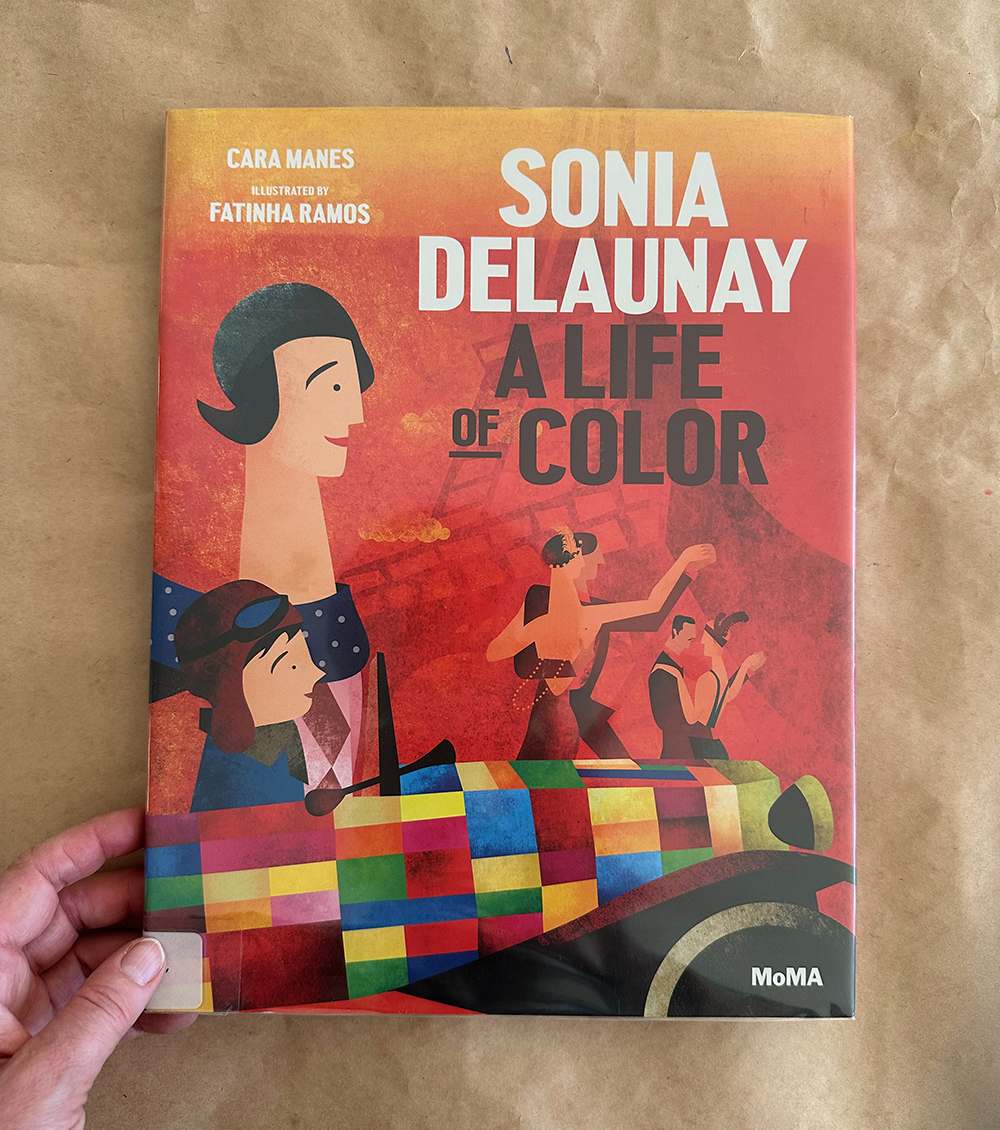
Dreamer from the Village: The Story of Marc Chagall
by Michelle Markel, illustrated by Emily Lisker
Moshe (later Marc) was born in Russia. He grew up in a busy town where he watched people walking the streets, like musicians, schoolboys, Rabbis, and women with their baskets of goods wrapped in paper. He saw the goats, chickens, and factories in the distance. The richness filled him. He saw things others didn’t, like houses floating and colors dancing in the sky, and he knew he was different. While his father worked at the fish factory, Marc dreamed of art. He drew on burlap sacks until he could attend art school in St. Petersburg, living in tiny spaces and painting the village scenes he loved. He went to Paris, and the sunshine made everything even more vibrant and sparkly. He visited the Louvre, staring at the paintings for hours. Years went by, and finally, a gallery invited Marc to have a show. He left the painting at the gallery and went back to Russia because he missed his home and his wife. Eight years later, he got a letter from an old friend in France who told him he was famous there. The paintings that he had left sold for a lot of money. He and his wife moved back to France and he finally could make a living doing what he loved. At 90, he was invited to show his work at the Louvre. The place where he had gone to get inspiration was now validating his work. His childhood visions had become a gift to the world.
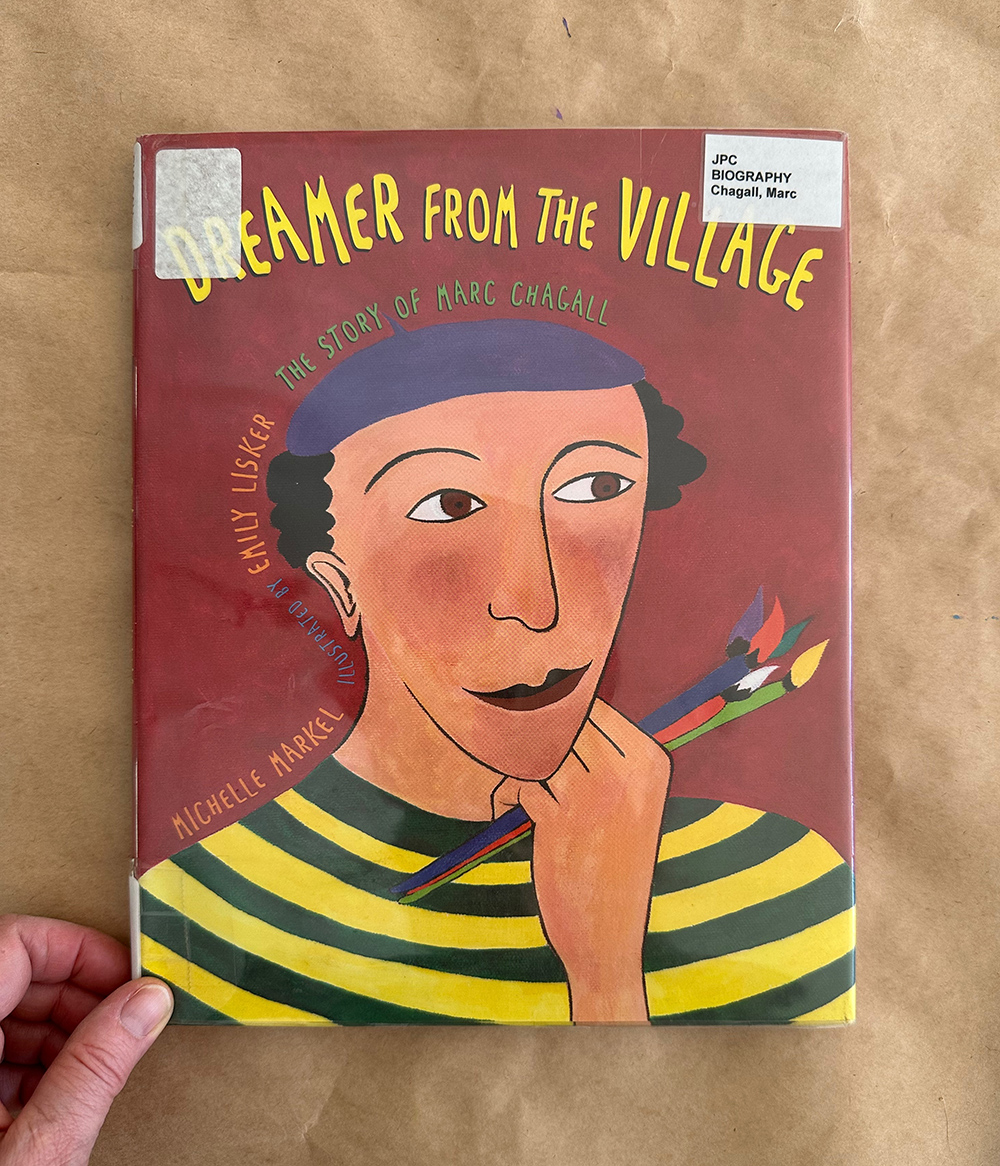


The Noisy Paintbox: The Colors and Sounds of Kandinsky’s Abstract Art
by Barb Rosenstock, illustrated by Mary Grandpré
Vasya Kandinsky grew up learning how to be a proper, polite Russian boy. One day, his aunt gave him a box of paints. As he mixed colors, he heard sounds, too. He asked, what’s that sound? But his Aunt didn’t hear anything. The sounds sounded like a symphony. Vasya painted the sounds of the colors. He showed his family what he made, and they asked, Is it a house? Is it a flower? What is it supposed to be? It’s music! His Aunt sent him to art class, but he was taught to paint houses and flowers like everyone else. As the years went on, he studied to be a lawyer and ignored his noisy paintbox. But the chorus of colors around him still sang to him. One day, he went to the opera, and the music turned into dancing colors all around him. He quit his job teaching law and moved to Munich to become a painter. He studied with artists who also thought that art should make you feel. None of them were brave enough to paint feelings, except for Vasya. With his noisy paintbox, he created something entirely new – abstract art. It took a long time for people to understand. His paintings weren’t supposed to be something; they were supposed to make you feel.
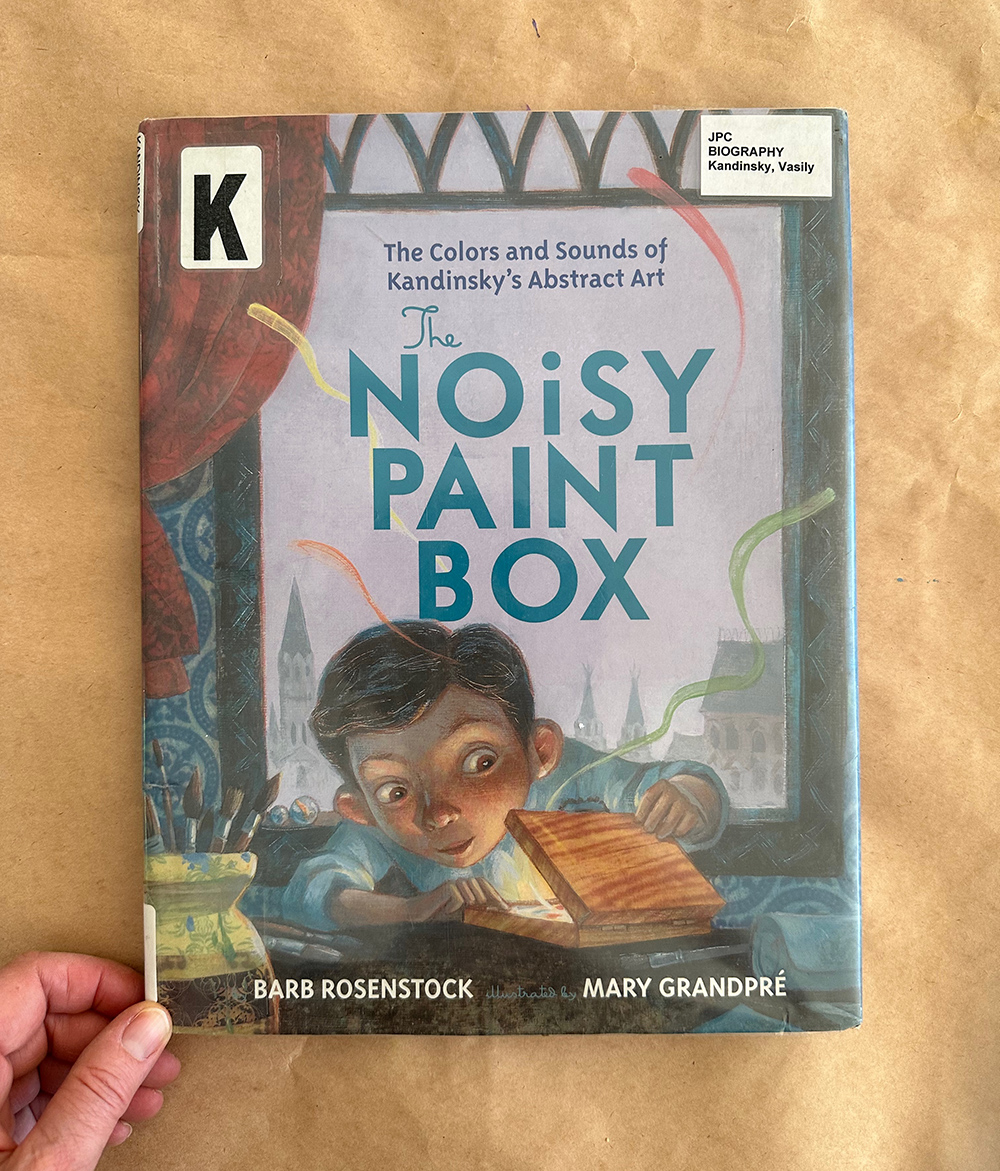


Sonia Delaunay: A Life of Color
by Cara Manes, illustrated by Fatinha Ramos
When Sonia’s young son, Charles, finds a familiar patchwork blanket made of fabric patches that looks and smells familiar, he asks his mother about it, and she says she made it for him when he was born to keep him warm in his cradle. It reminded her of the patchwork blankets people made in Ukraine, where Charles was born. Now they are in Paris, and Charles’ parents were both artists. Can you hear the colors sing? Sonia asks Charles. When he says that he can’t, she decides to take him on an imaginary trip through Paris in their car. As it soars in the sky, she tells Charles to close his eyes and follow the sounds of the colors. What ensues is a trip to all of the places that inspired Sonia’s paintings. They go to the colorful markets of Portugal, where shapes fit together like a puzzle, a fabric shop in Amsterdam that sells Sonia designs, and more. Charles begins to see and hear the art all around him. By nightfall, wrapped in his vibrant quilt, he finally understands the language his mother has always spoken: the music of color.


These picture books really inspired the artist in me and gave me a new perspective on myself. I, too, have never been surrounded by people who believed in my artistic direction growing up. Yet here I am, still making art whenever I can. I have made a pact with myself that at age 60, I am going to start making art full-time. The stories within these books reminded me that artists are just different from other people. They hear a quiet but insistent voice inside them, a pull they can’t ignore. Being an artist is a calling, it is a vocation, it is not just a career or a job. Many artists need a job to support their art-making, but art is life, and therefore, they can never give up. Being an artist takes so much courage, and having a window into the worlds of these famous artists is just very self-affirming and hopeful.
I also love how all of the illustrators made the pages sing in the style of the artist whose story they were telling. I hope you share some of these stories with the young artists in your world to inspire them to keep following their convictions.
xo Bar
– – – – – – – – – – – – – – – – – – – – – – –
If you loved this post, here are some more books to explore:
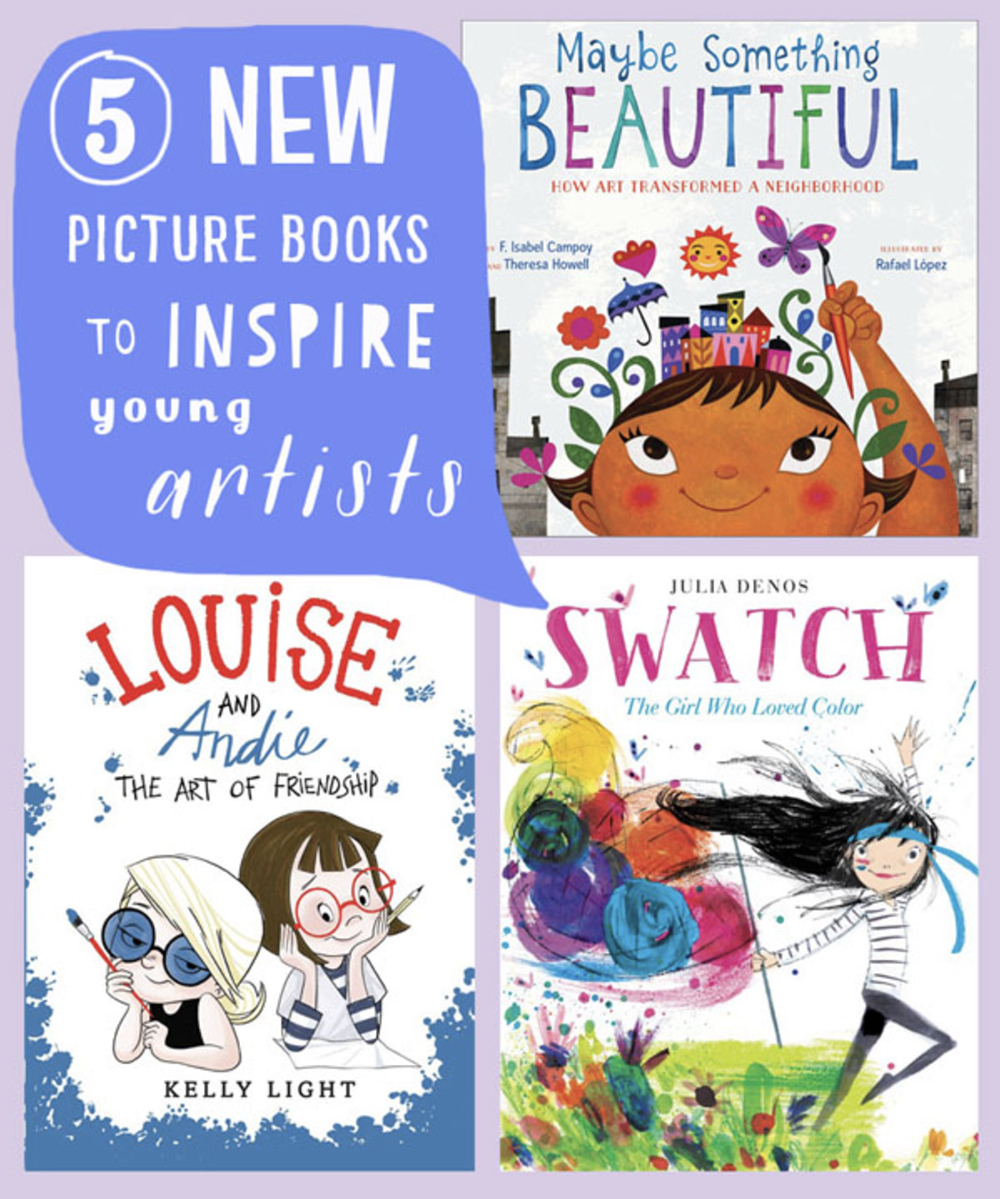
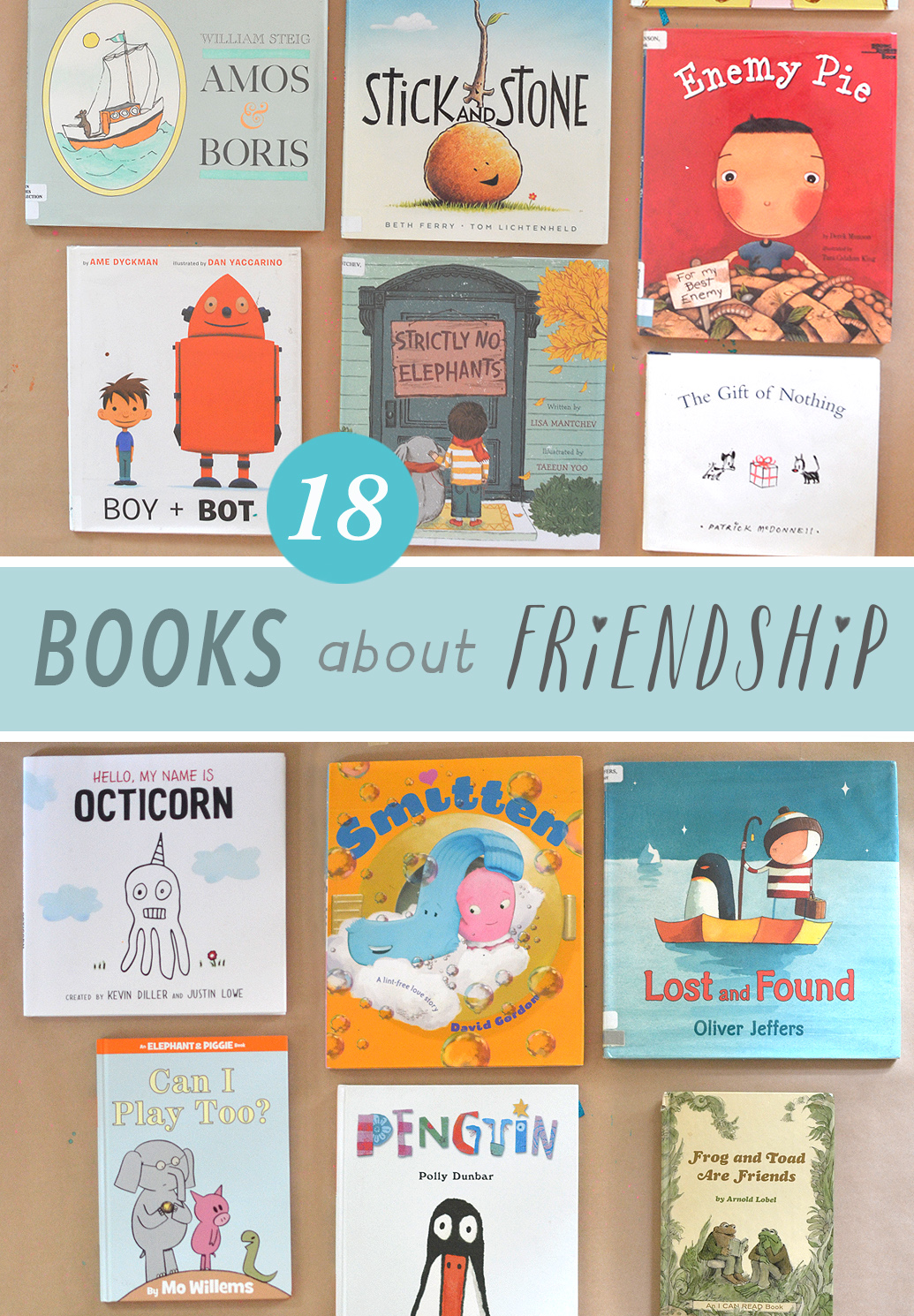


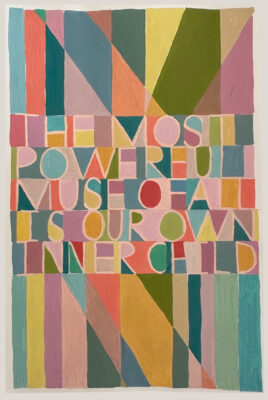
These are a wonderful selection of books demonstrating the power of positive thinking and determination. Good for both children and adult artists!
Thank you — these are truly wonderful books for children!