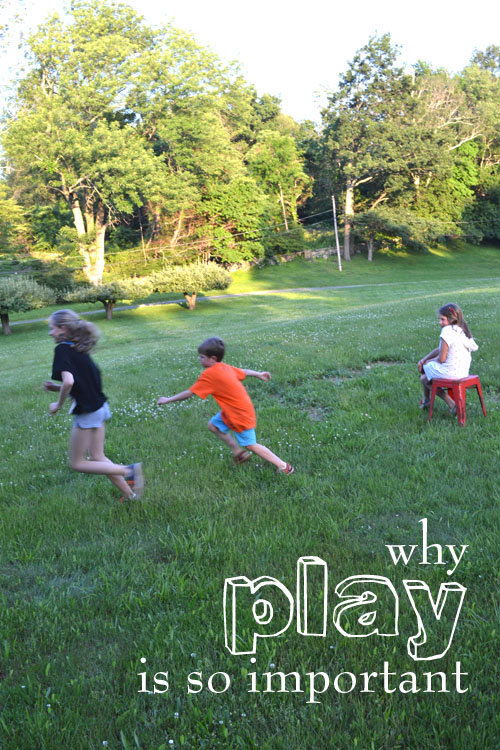
I have just finished reading Nurture Shock
The authors propose (through research that they have parsed through and reviewed thoroughly) that parents and educators make small corrections in their thinking, the key being to ignore common assumptions or “maternal wisdom” about children in favor of scientific reason, much of it counterintuitive.
There are 10 very organized chapters, ranging from “The Inverse Power of Praise” to “Why Kids Lie” (this chapter is especially interesting to anyone who has a teen or pre-teen).
One of the most compelling chapters is called “Can Self-Control Be Taught?”. It sites a very interesting pre-school and kindergarten program that was developed in the 1990’s by two scholars in the Denver area. It was a technique, really, that they developed as part of a curriculum that required some training, but did not cost a penny more than a traditional curriculum. They called it “Tools of the Mind“. Initially developed for children “at risk”, the results were so staggering that researchers could not finish their study because teachers in the control groups (the ones who were not using Tools) felt that in good conscience, they must provide all children with the Tools curriculum.
What Tools of the Mind focuses on is how to help children avoid distractions. And how do Tools teachers succeed in teaching 4 and 5 year olds to focus and concentrate on an activity for an extended period of time? Through play!
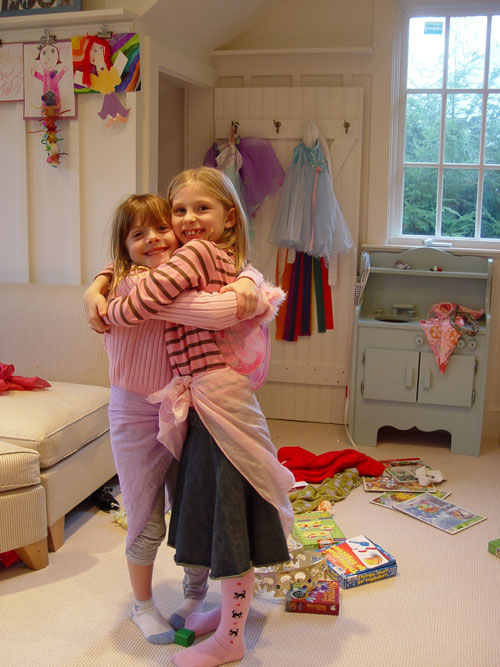

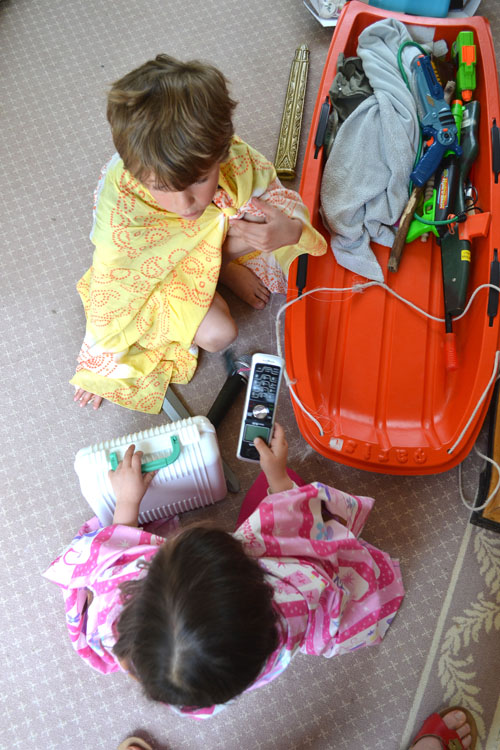
For example, in one famous Russian study from the 1950’s, children were told to stand as long as possible – they lasted two minutes. But then a second group was told to pretend they were soldiers on guard who had to stand still at their posts – they lasted eleven minutes!
Another example: When small children are asked to copy something from the board, they may not think they can do it. But hand the same kid a notepad and ask them to pretend to be a waiter at a pizza parlor, they don’t think about if they can write or not – they just know they have to do something to remember those pizza orders.
Here is an excerpt that I have read over and over:
“It’s well recognized that kids today get to play less. As pressure for academic achievement has mounted, schools around the country cut back on recess to devote more time to the classroom. This created a backlash…experts arguments were straightforward: the brain needs a break, kids need to blow off energy, cutting recess increases obesity, and it’s during recess that children learn social skills. Tools suggests a different benefit entirely – that during playtime, children learn basic developmental building blocks necessary for later academic success, and in fact they develop these building blocks better while playing than in a traditional classroom.”
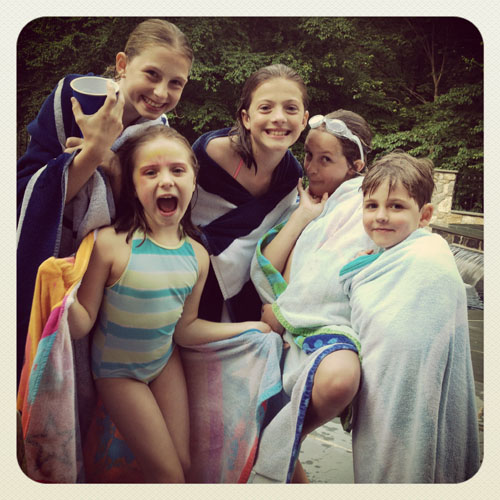
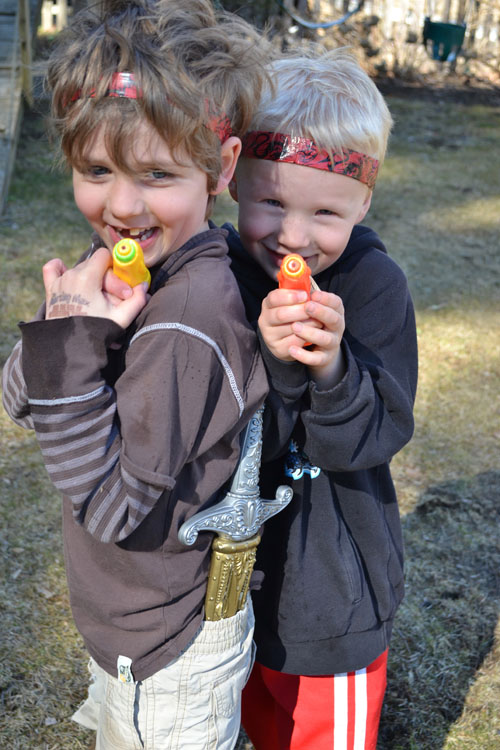
Through play, children learn abstract thinking, symbolic thought, high-order thinking like self-reflection, they develop an internal voice (“I can do this!”), the ability to self-analyze and to set goals. But it’s not all about managing information, either. Through the process of play, children learn to squelch frustration and anger, and to stifle inappropriate or impulsive responses.
In addition, when children get to choose their own activity (not one their parents signed them up for), they become highly motivated. And when children are motivated, they learn more.
I have always believed in the power of play. I try very hard to not let peer pressure (yes, moms feel peer pressure, too) sway me into signing my kids up for too many after-school activities. We live in a great neighborhood where they can safely walk outside on any given day and find a friend, play a game. Or they can play with their siblings. Yes, there is squabbling (there is even a chapter in the book called “The Sibling Effect”). But eventually, if I give them no other choice, they will work it out, compromise, and create roles for one another.
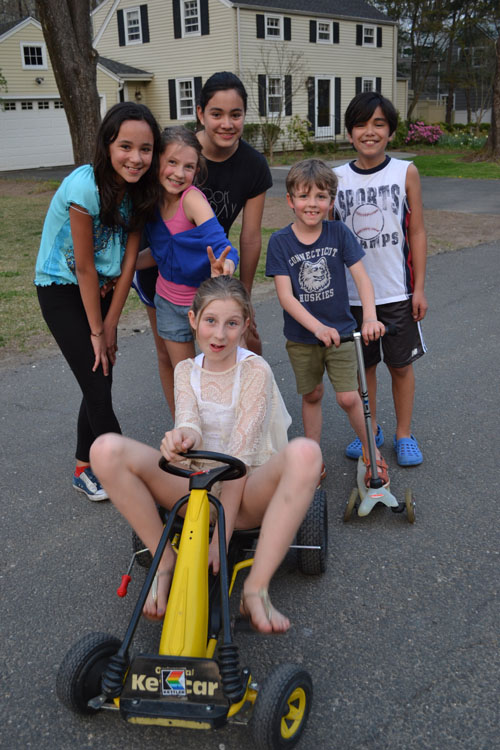
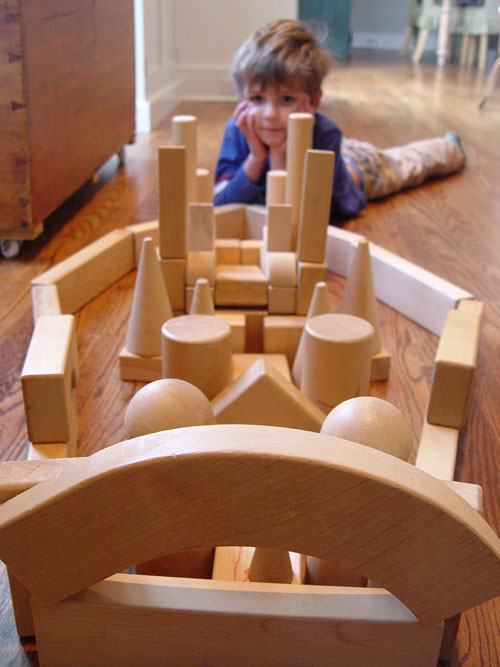

My best advice to any parent with school-age children: Let them play!
xo, Bar


I agree — so very important for kids to have time to play. Our school has changed to favor more brain breaks and open play time during the past few years. My older son (in HS) doesn’t have that opportunity during school but we push very hard to have him put down the books and just ‘enjoy life’.
I haven’t yet read the book — can’t wait to get my hands on a copy as I love the excerpts you shared.
thank you jacquie!! the book is a good one to have in your at-home parenting library, i think. i am working on a post about another favorite book of mine, too, so stay tuned 🙂 (there are a few books that are like references for me.)
my daughter just entered high school and i, too, make sure that she still has “play dates” with her friends. she’s still a kid! i wish our middle school valued play more. our middle school starts in 5th grade which is just too young for the kids to be in a middle school environment where work is so over-valued. but i think it just means that we, as parents, need to make sure they have time to play at home! xo, Bar
I too am fascinated by this chapter and am wondering what this looks like (in your experience) for older kids– middle and high schoolers. Many of them spend their play time “playing” video games (if they are not doing organized sports–which, you could argue, is too organized to be pure play). I’m doing recon on this for business and personal purposes, as I teach writing with emphasis on the importance of inventiveness and physicality, but I am also raising tween/ teenagers.
Great question, Sara. I think play for older kids (I have 10, 14, and 17 myself) is being with friends. For my older two girls: no phones, just being silly, listening to music, making up dances, talking about the future. And also, they do play a lot of board games, especially Clue these days. For my 10yr old son, he’s still in the kid category. Play for him is being outside with the boys playing sports or using their nerf guns, playing spy. Downtime without screens is when they go back to the play of their youth. good luck with your recon! xx bar