This was one of my favorite tables I have ever put together. My idea was to experiment even deeper with “not teaching.” As art educators, we feel like we always have to communicate the subject matter, explain the process, or give directions. But what if the materials became the teacher? What if you set up a provocation and simply let children decide how they were going to interpret the medium and the environment? This is a big leap of faith and takes many years of practice. My library open-studios really push me to not teach, because I physically cannot. I have anywhere from 60-100 bodies in the space, including children and grownups, so my role is to curate and set things out in an inviting way, and then I must step back and watch the play unfold. Parents are there with their children, and often they will talk to their child about what is on the table. But for my regulars — children and parents who have been many times before — there is little, if any, communication. The grownups trust that the children will figure out what to do, and the children have developed enough confidence to dig in and explore as they go, unafraid to stumble and try again. Sometimes they have a plan, and sometimes they don’t.
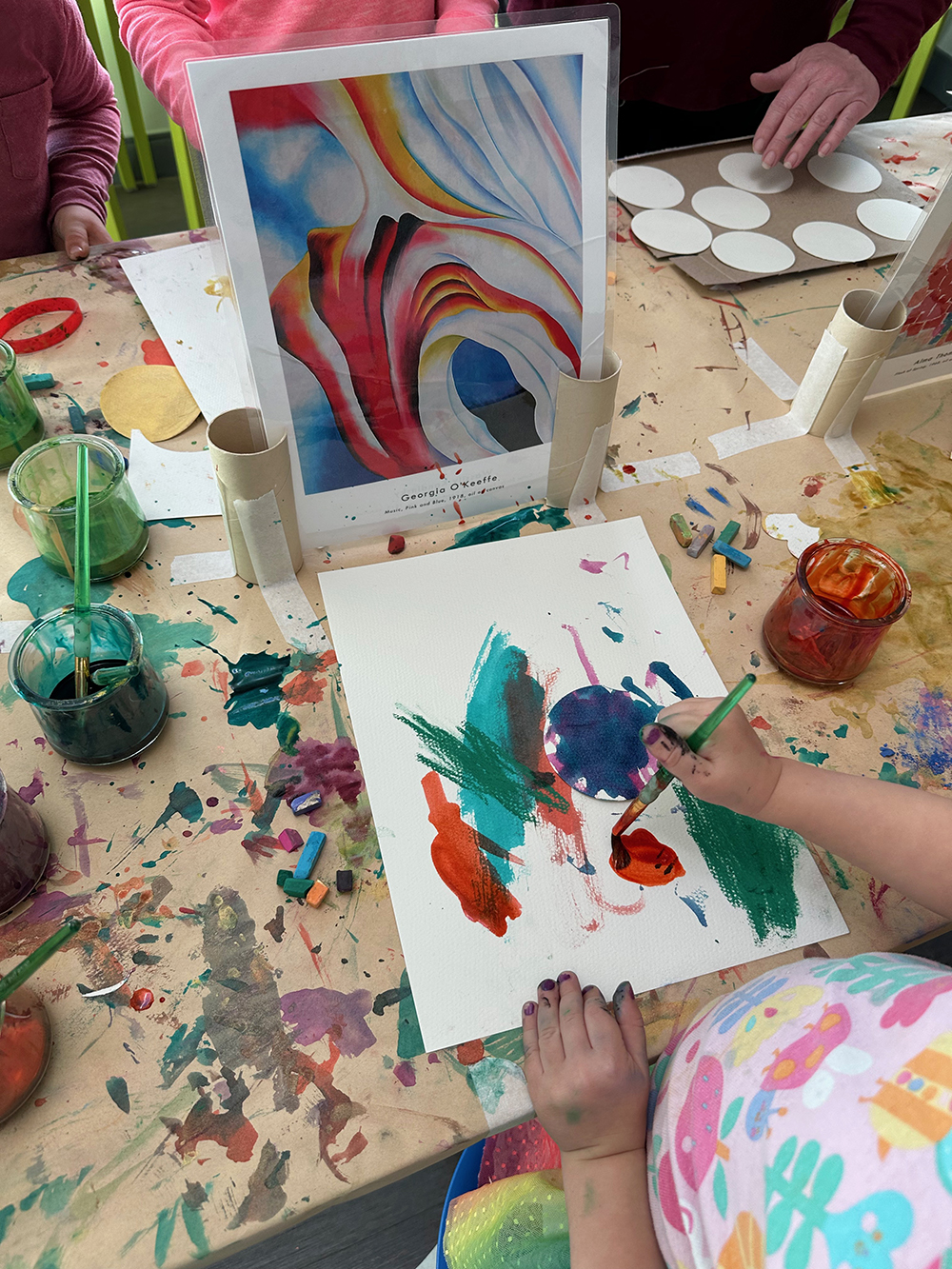
But back to this day in particular. I printed out a series of artworks by famous artists and laminated them back-to-back with my Scotch laminator. (I cannot offer these to you to download because of copyright matters, but I did use Photoshop to make them look professional. (You don’t have to do this; you can just find the image, screenshot, print it out, then cut around the image and glue it to white paper.) I set them out on the table using toilet roll tubes and scotch tape as makeshift stands, which held up very well. Then I set out liquid watercolor and chalk pastels, reflecting the colors of the artwork near each piece.
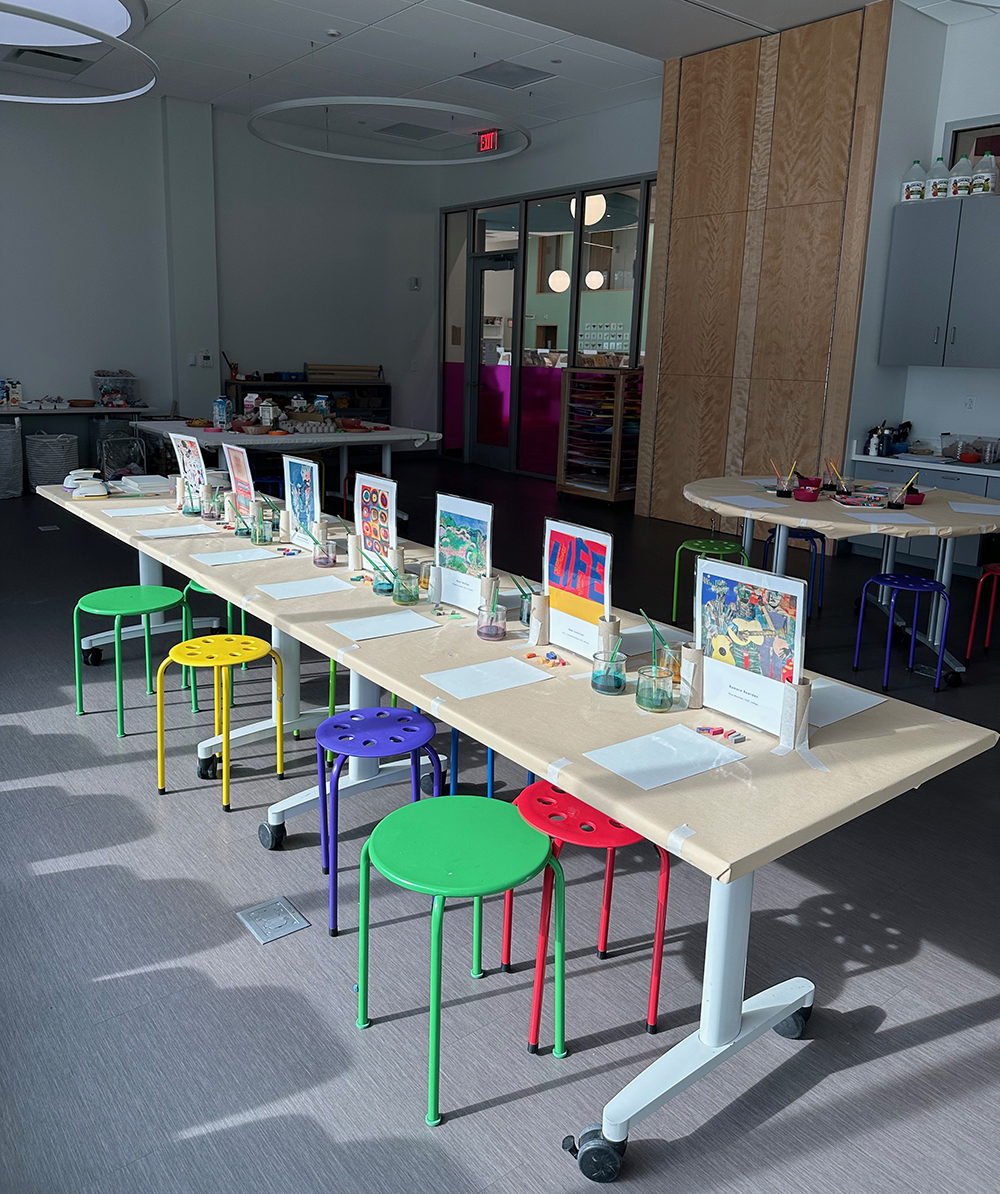
My go-to supplies for this painting table:
~ Liquid watercolors (I like Blick; it’s very concentrated and lasts a while; I dilute with water)
~ Small jars (mine are recycled Oui yogurt jars; you can get lids for them here)
~ Chalk pastels or oil pastels (either will do)
I also included these tools, completely optional:
~ Scissors
~ Big paper punches (circles, scalloped shapes, hearts, etc.)
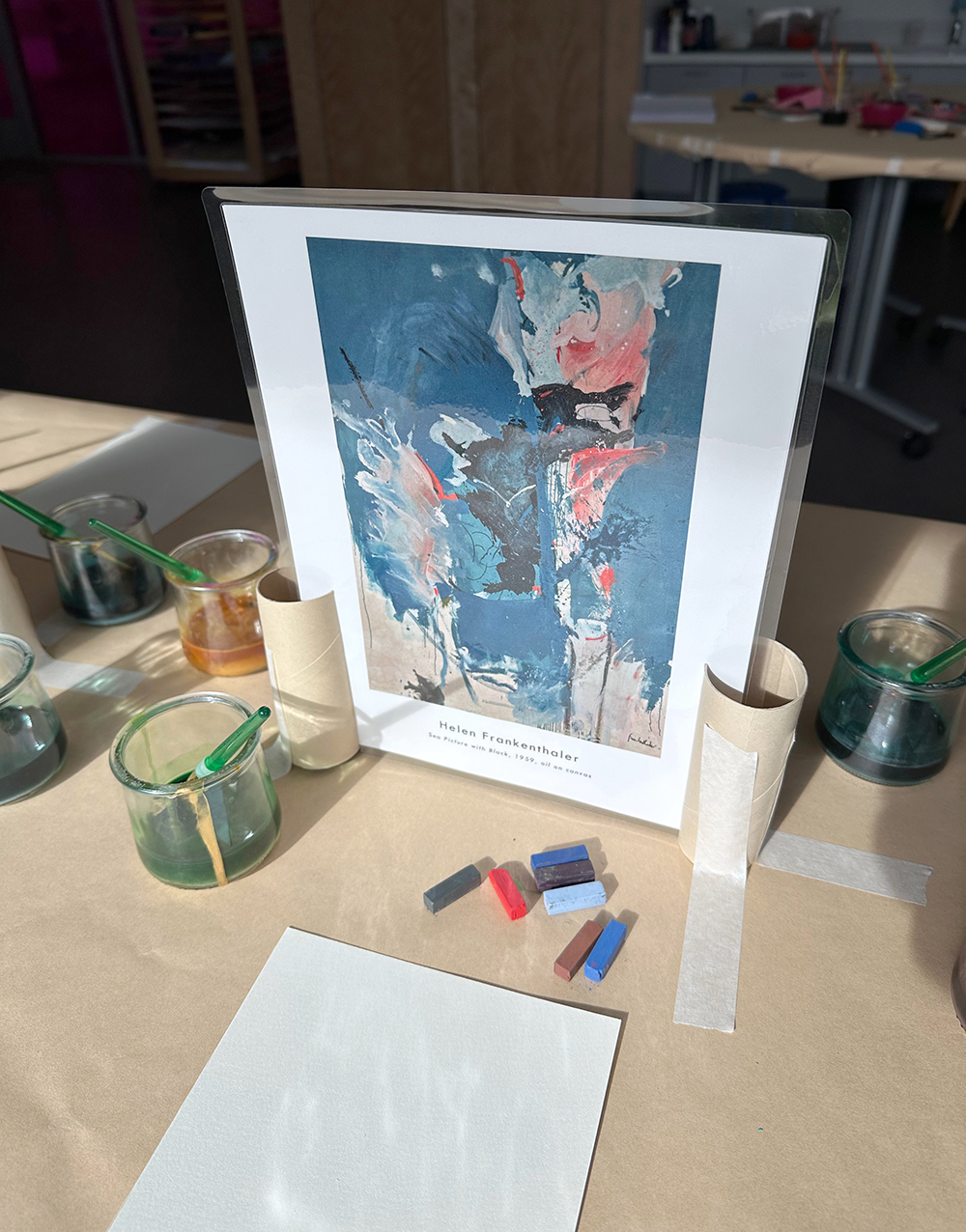
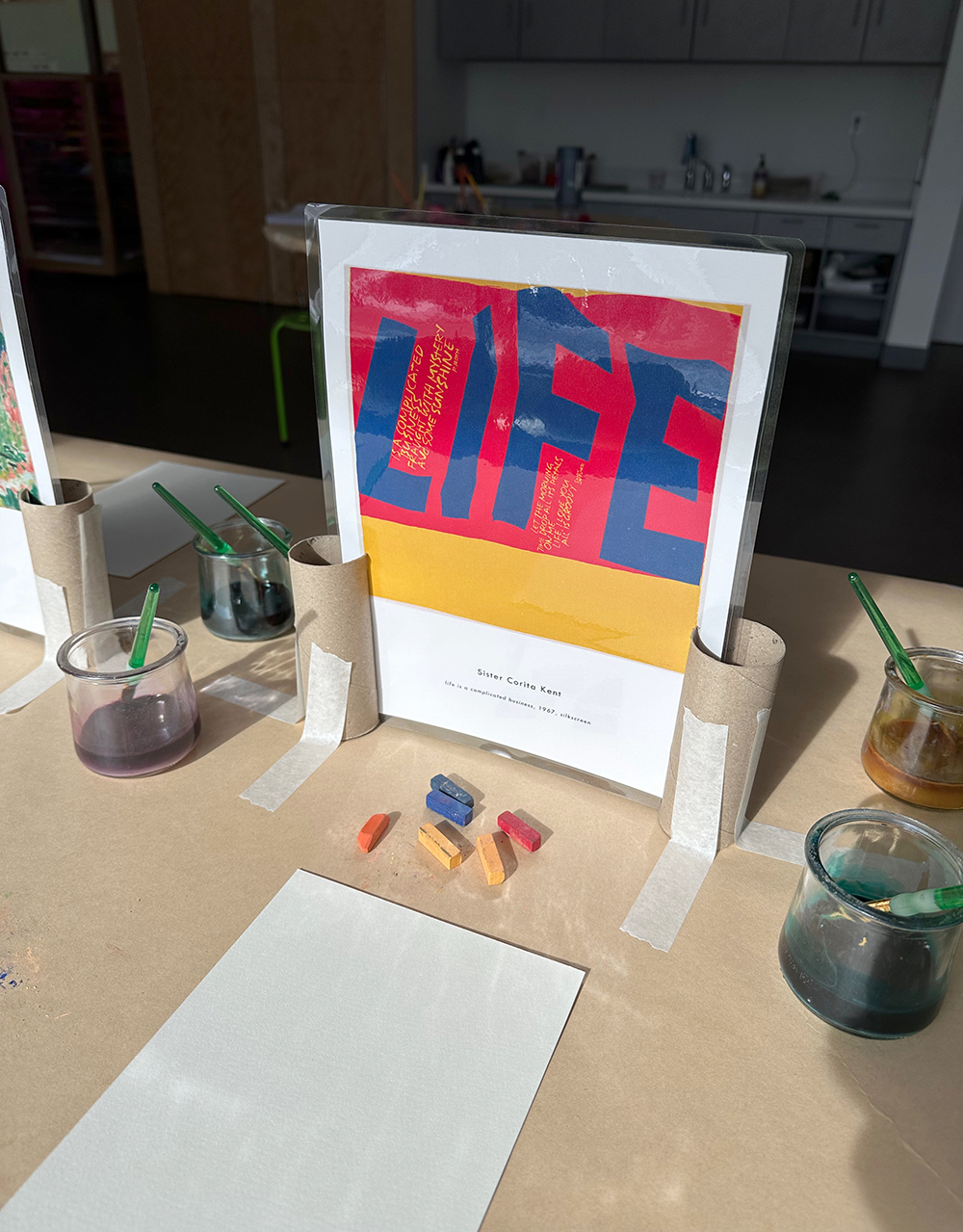
I was thoughtful in setting up this table, coordinating the pastel colors with the artwork. This is the most directing I did on this table. A hint towards a color story, and a hope that children would catch on and reflect the color and composition of what they were seeing. Sometimes this did happen! I caught several instances of even very young children deep in concentration, inspired by the great paintings in front of them — whether it was the shapes, the colors, the composition, or the mood.
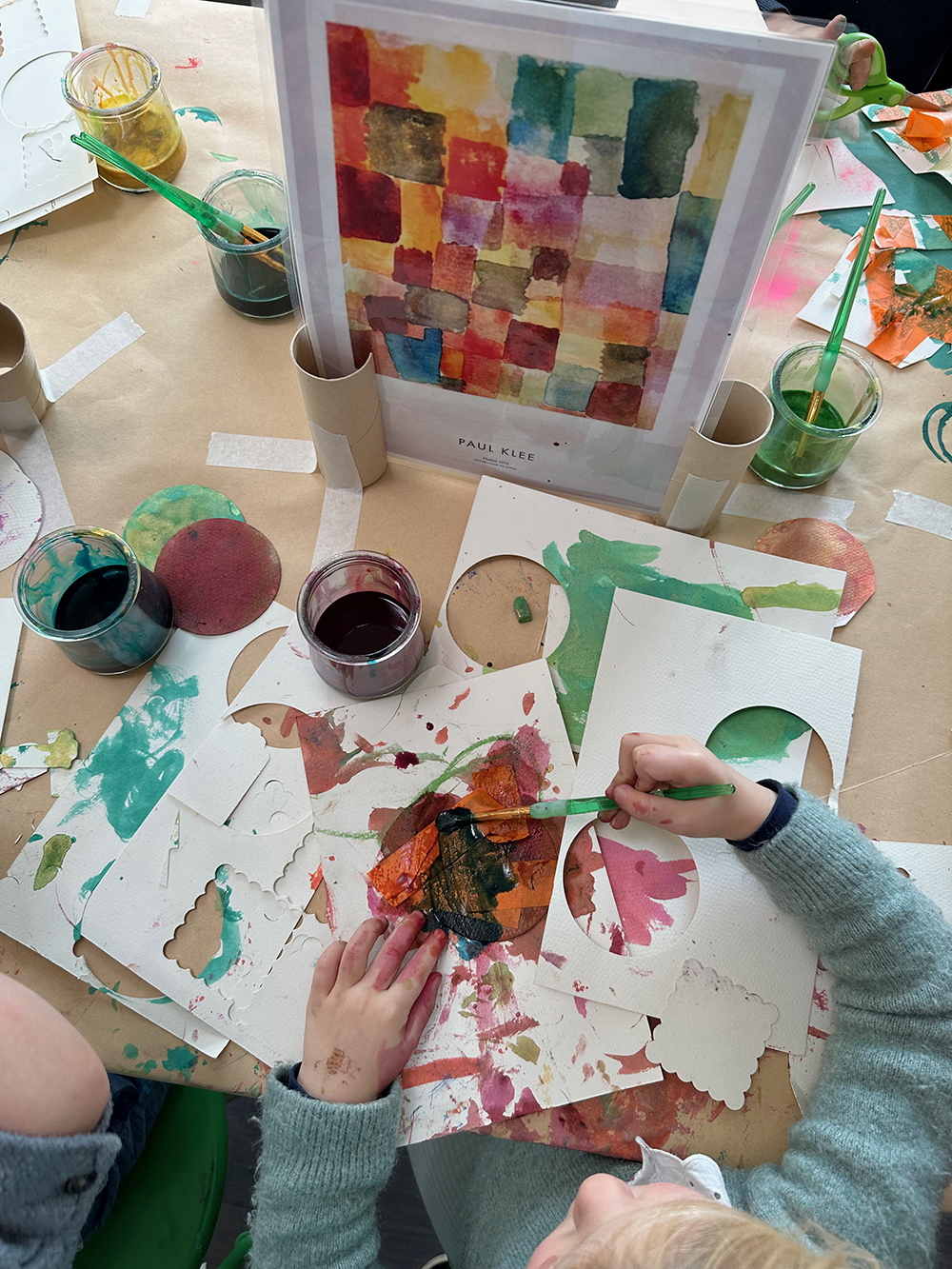
The child above saw shapes and movement in the Paul Klee painting, reflecting the layered feel and some of the colors.
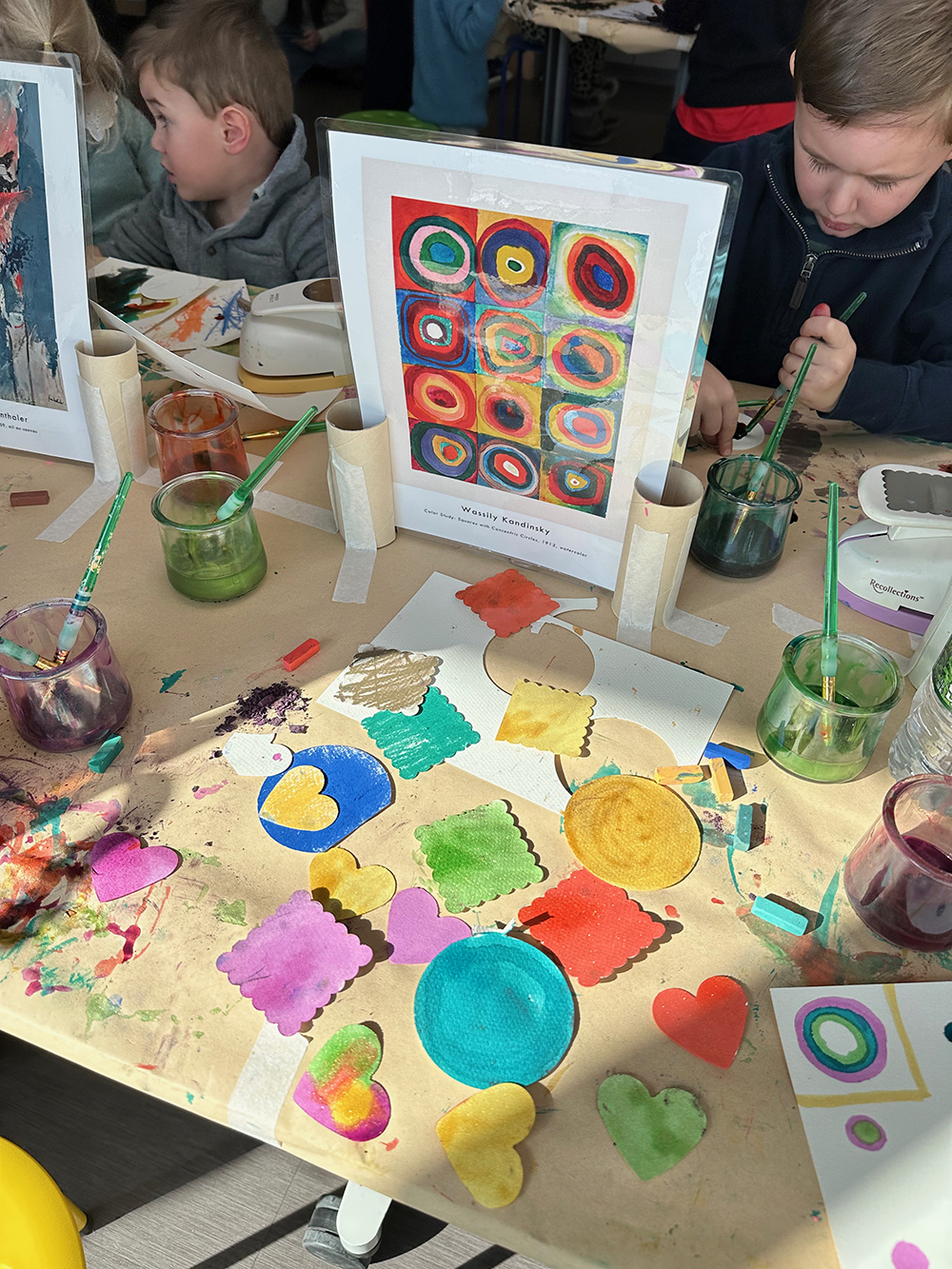
The child at this seat painted separate shapes and used them as a game, reflecting the playful, colorful, layered work of Wassily Kandinsky.
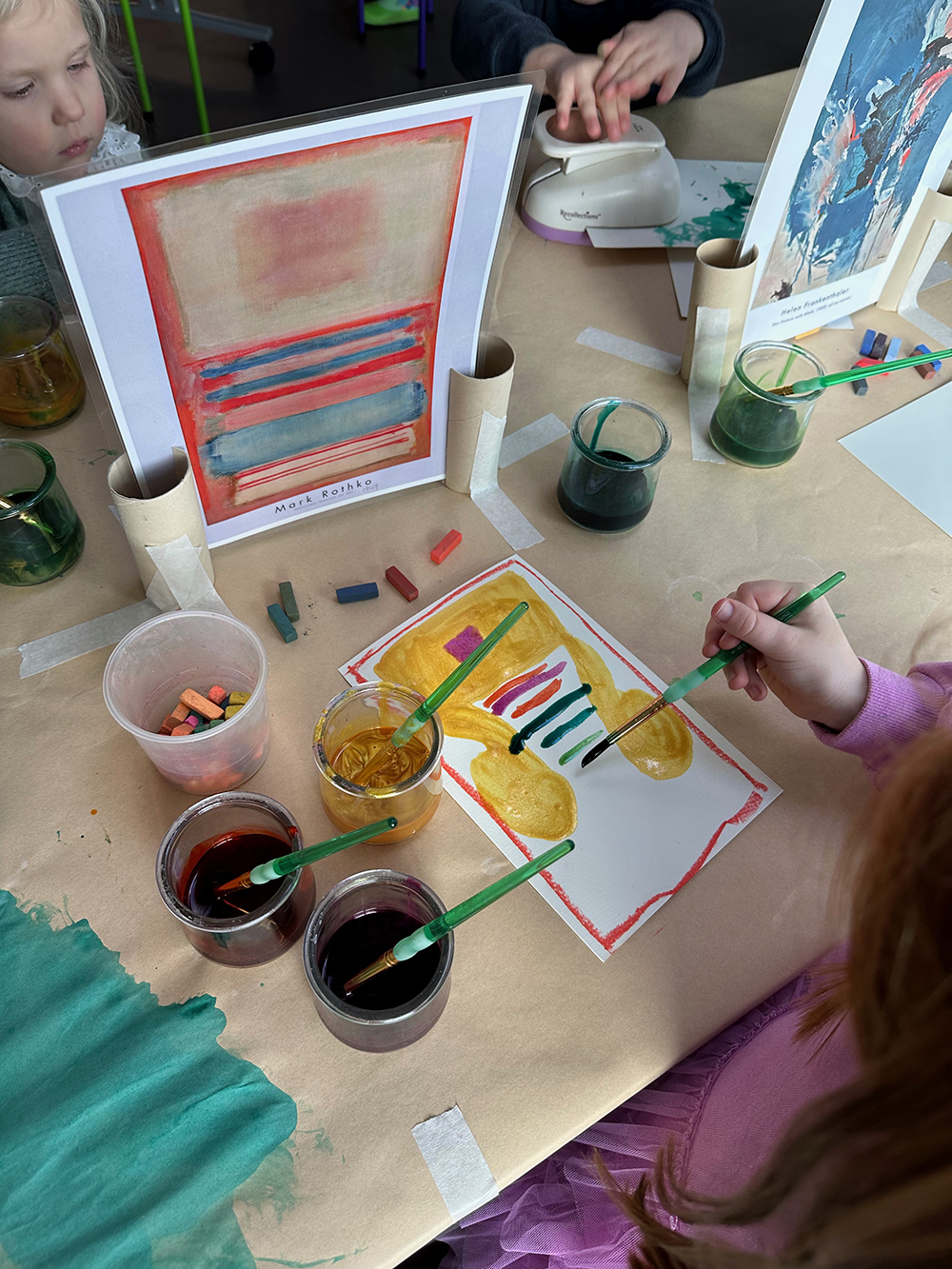
An older child notices the lines and rectangular shapes of Mark Rothko, choosing a color palette of her own.
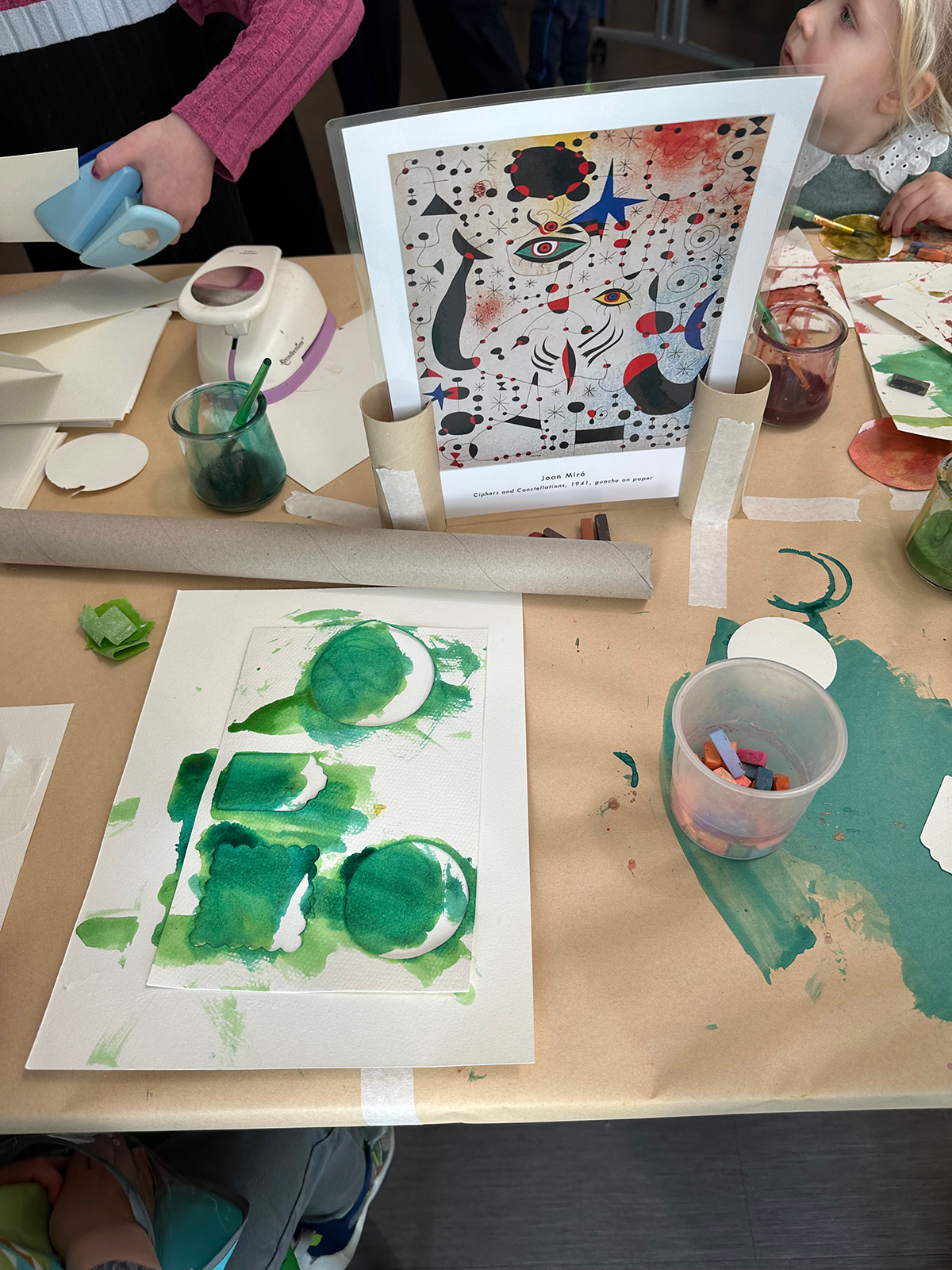
This abandoned piece may or may not have been inspired by the painting by Joan Miro, but it seems that the shapes floating about certainly inspired their composition, and they discovered a stencil technique while playing with the materials.
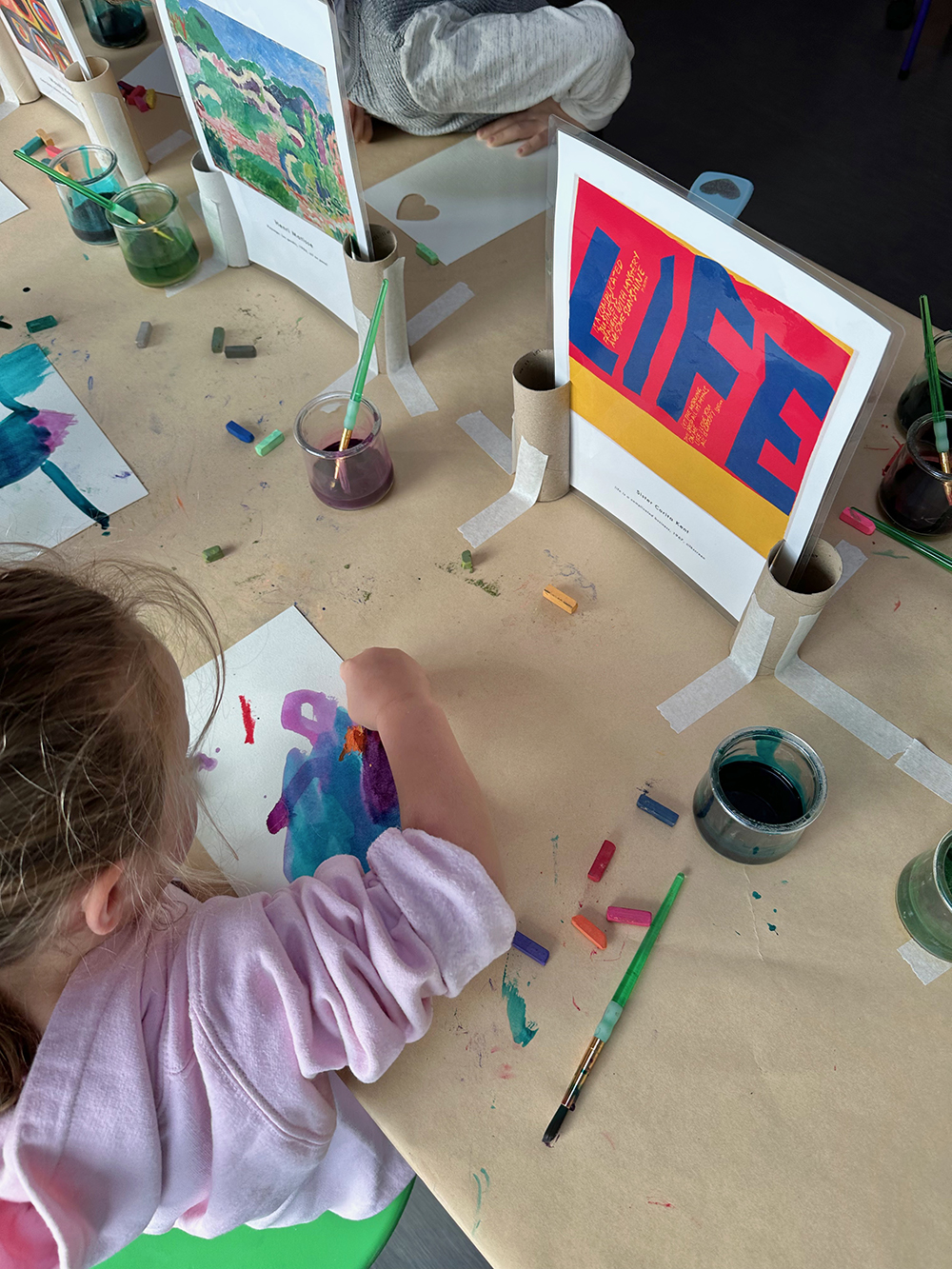
Sometimes the direct interpretation is hard to find, or maybe not there at all, which is fine! Some children may not even look up; they are too immersed in playing with the materials. If I do this again, I will include some colored paper shapes as another element to inspire shape and movement.
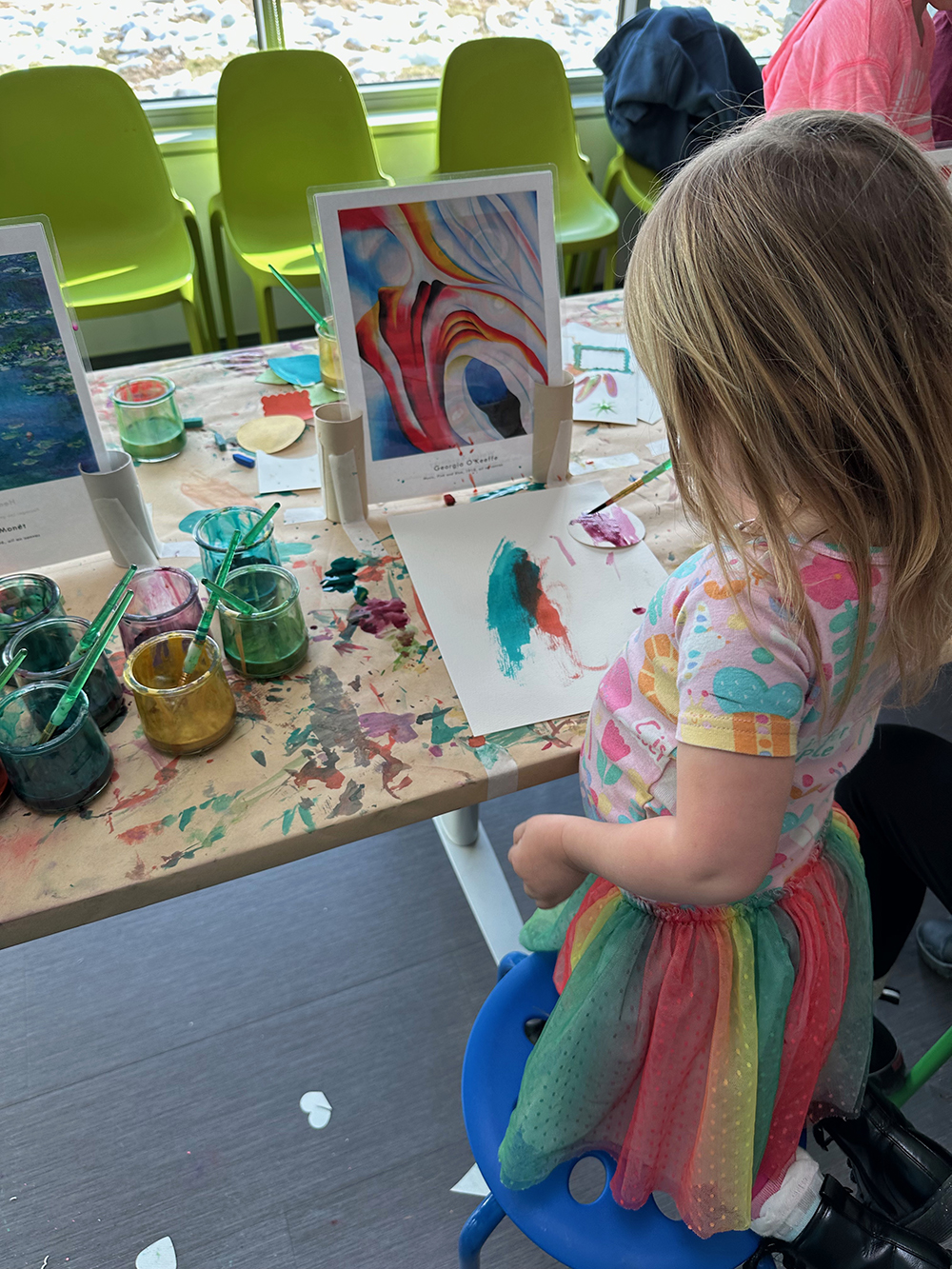
I loved how the movement of this child’s skirt reflected in Georgia O’Keeffe’s painting! And you can see how her own painting progresses. At first, she makes big, bold marks on one side, inspired by what she sees. And then, after working for a while (go to the top of this post to see a further-along image), she creates a blue focal point and moves the paint around this blue circle in the spirit of
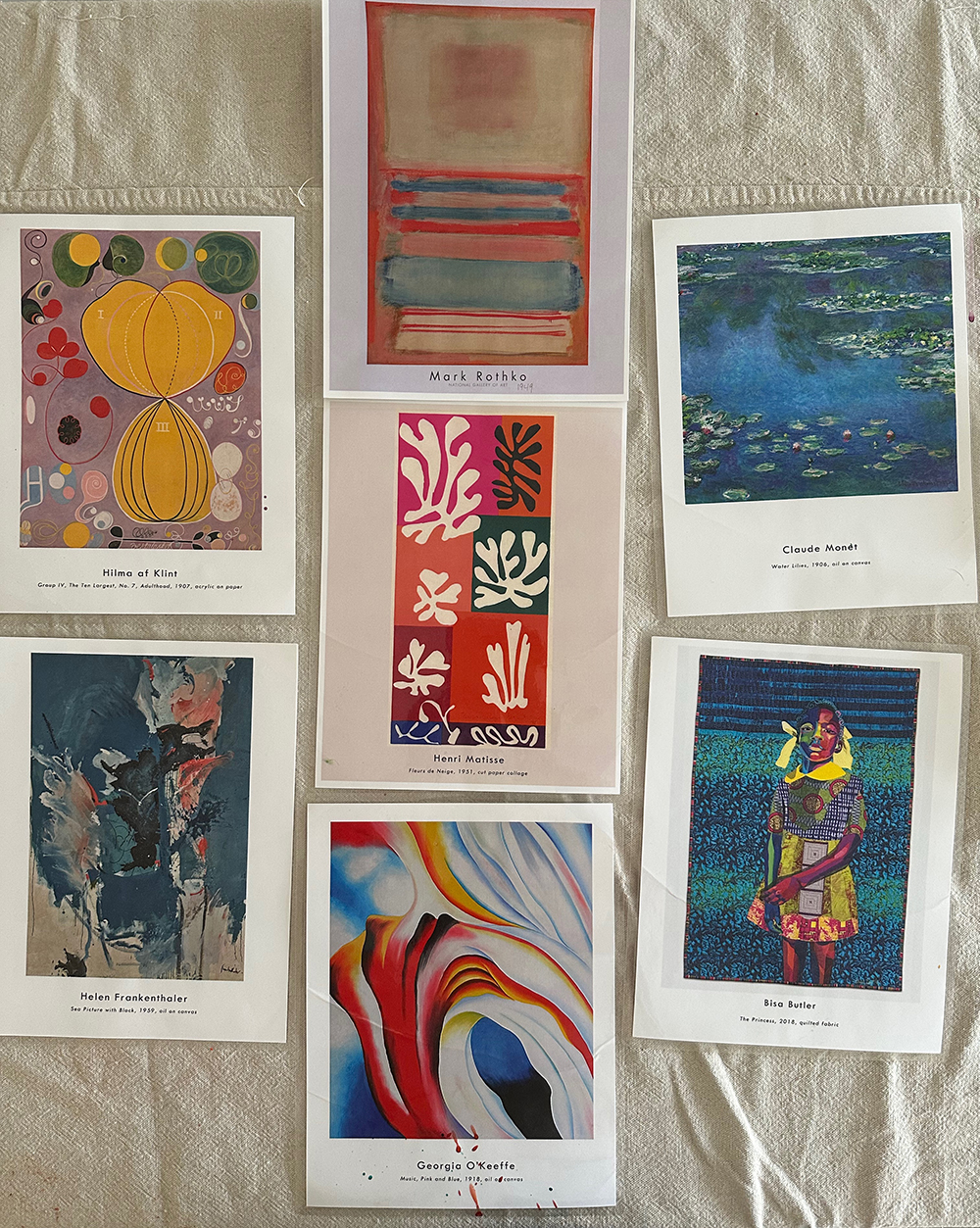
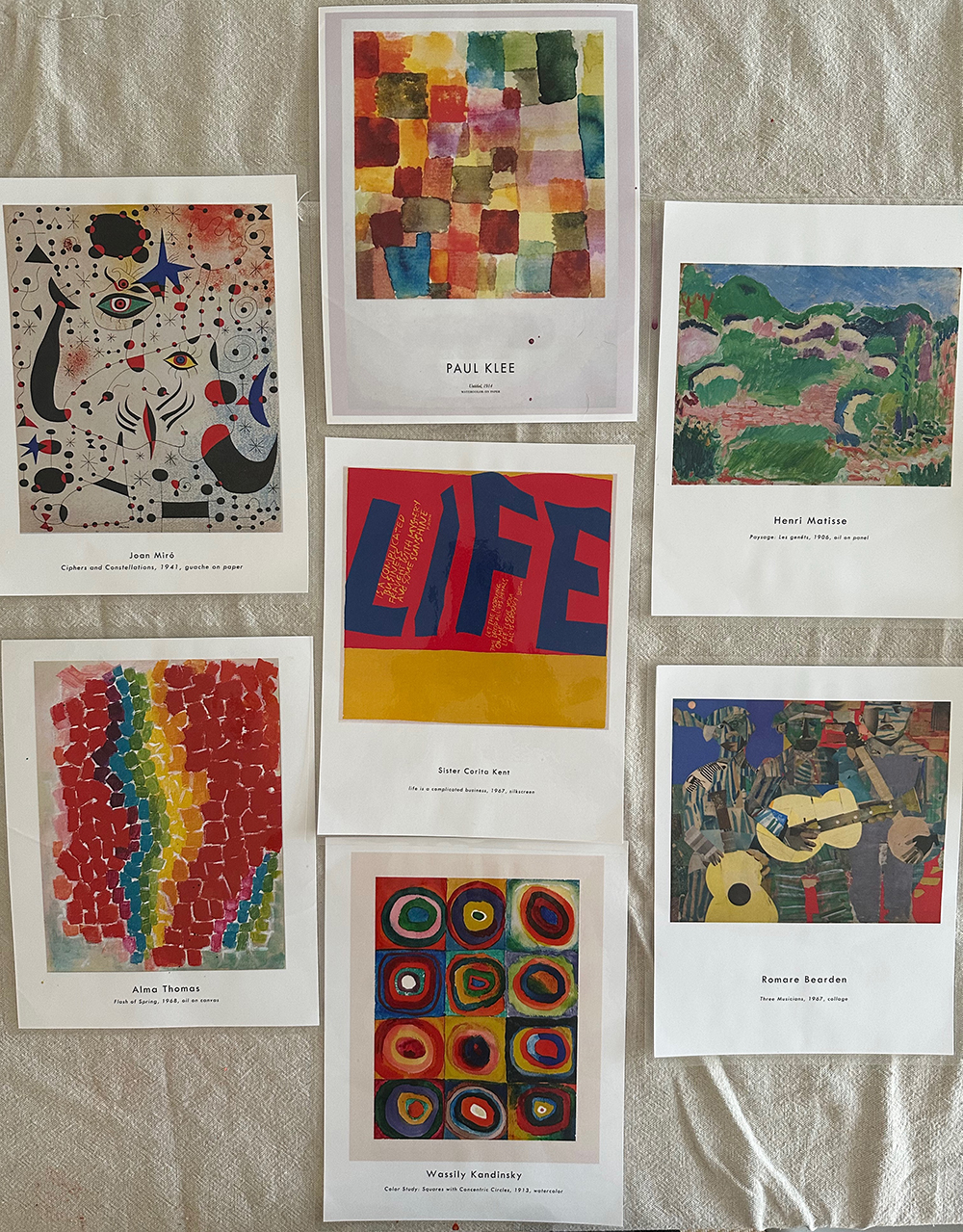
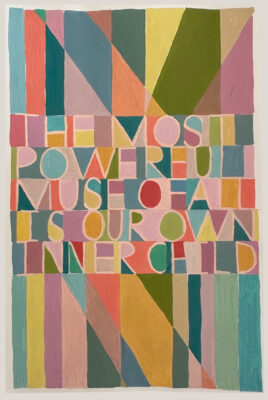
These are the artist images that I used (double-sided). I wanted a mix of recognizable images and artist names so that the grown-ups in the space would feel confident art historians, along with some new and current artists, so they could feel like they were learning, too. I overheard many conversations between grown-ups and their child, talking about the artwork and repeating the names. I try not to interrupt when children and parents are connecting because their child doesn’t know me, and often a stranger butting into a conversation breaks the flow and intimacy of the shared ideas. Of course, I am hovering and documenting with my phone, so it’s a strange fly-on-the-wall experience, but I’m grateful that parent and child mostly can ignore me.
Let me know if you have any questions! I am thinking about writing another book (lord help me), so if there is some explaining I missed or more things you want to know about, ask away!
xo, Bar
– – – – – – – – – – – – – – – – – – – –
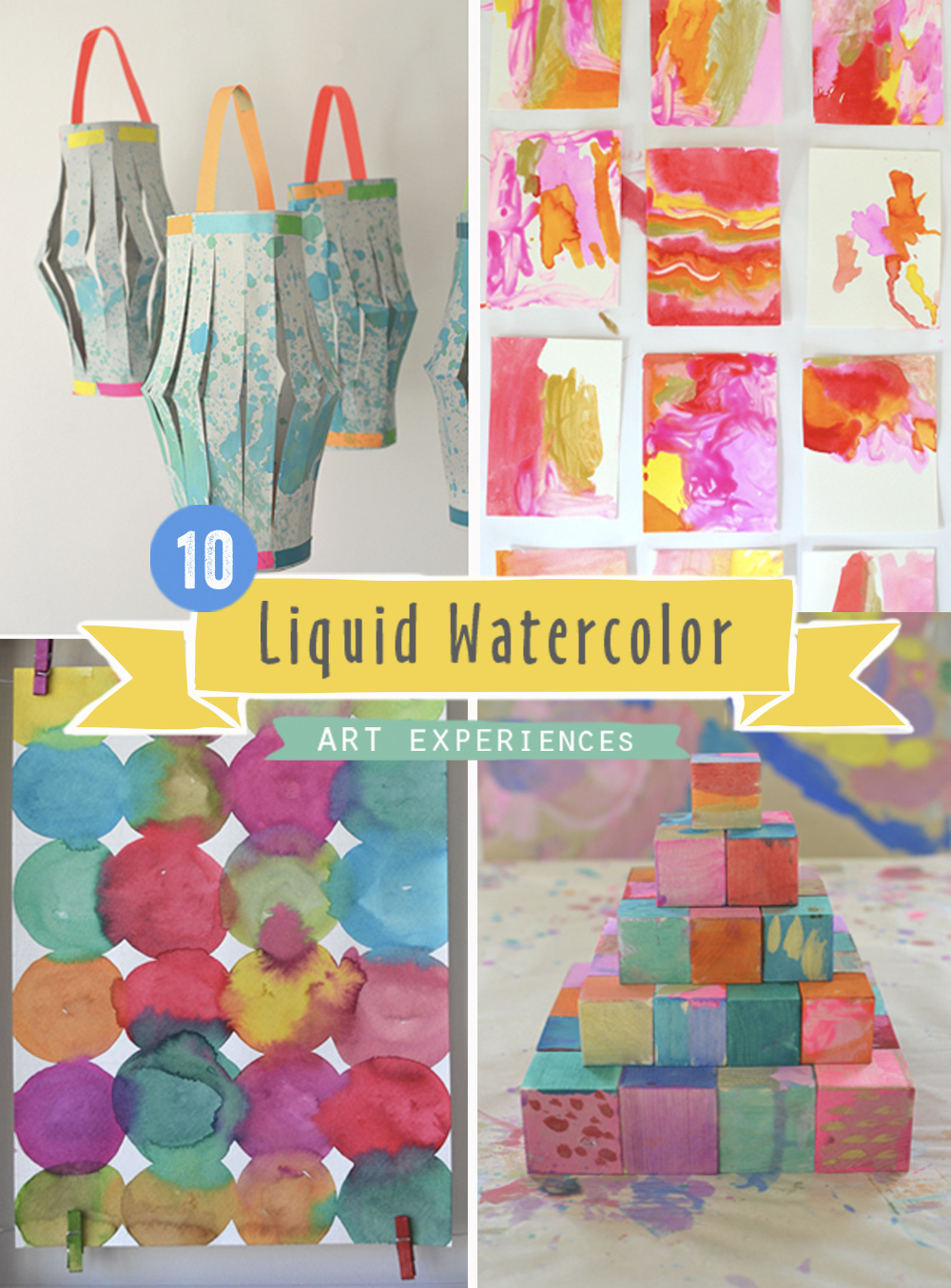
Did you like this post? Here are more liquid watercolor ideas for children and groups:

I would be the first one to buy that book! I’m struggling with how to present process art to older or mixed age groups. Love everything about this!
thank you Brittany! I am very much working on the book, and I will be sure to include older kids in this work, too. You’d be surprised how easily they adapt to open-ended experiences. It takes a minute bc they are so used to being told what to do, but once they understand that the choices are theirs, it won’t take long for them to find their voice and surprise you with their ideas and creativity. xx Bar
Loved seeing the Corita Kent artwork. I’m a big fan of her work. And kids enjoy learning about her.
I also love getting your emails. I retired teaching elementary art in Pasadena a few years ago and boy, do I miss it! Keep up the good work!
thank you Heidi! thank you for being here and leaving a comment and reading my newsletters. It’s a labor of love and it’s so nice to hear from readers now and again. I hope you can find ways to keep your hands busy, and inspire the children in your world. xx Bar
Absolutely loved this post!!
Thankyou for sharing you great creative ideas.
The kids must have had a fabulous time 🙏💖
I wish i had you in my area!